
LifeAdvantage

The digital platform focuses on the needs of students, and young professionals who are digitally savvy and looking to navigate the complex landscape of healthcare, benefits and assistance programs.
WHAT
Employee assistance plans often have low enrolment, low utilization, low satisfaction, and low activation, which can lead to wasted costs for employers and missed opportunities for employees. To overcome these issues we want to ensure that the offered benefits align with the needs and preferences of the workforce. 
CHALLENGE
How might we create an Employee Assistance Plan that is differentiated and leverages our unique assets and  infrastructure?
OUTCOME
Our approach will anchor on meeting the omni-channel care delivery needs of Canadians seeking health services through our product portfolio. We will leverage a Service Design approach to develop concepts to test and learn. The developed solution will work seamlessly with the organization, by effectively taking different stakeholders and departments within the organization into account. This ensures that the project aligns with the organization's goals and objectives and addresses the specific needs of the different stakeholders who will be working with the  service. 

Project Type

Mobile Application

Timeline

January to April 2023

Team

5x Masters of Information Students

Role

Project Manager + Service Designer

Conduct user research to align the needs of service users with the business goals, creating service blueprints and create a prototype to test and release.

Users

Students / New Graduates
Young Professionals
user research

Discovering pain points

7

Participants

7 participants (young professionals) were recruited and interviews with them were recorded and shared with the team.
4

Participants

Primary research was conducted with 4 participants who were either young professionals or students.
5

Phases

Onboarding, Research on Options, Service Engagement, Troubleshoot, and Claims Submission were the phases our research presented.
Affinity mapping
uSER JOURNEY

Creating a Journey Map

Understanding the customer journey is essential to providing a seamless and positive user experience. We identified five critical phases that customers typically go through: Onboarding, Research on Options, Service Engagement, Troubleshoot, and Claims Submission.

Address pain-points early

Lack of on-boarding, information overload when understanding coverage and finding a service provider, not knowing the next step or what to expect are causing issues and negative feelings later in the journey.

Easy access to information

Users are unclear about their coverage and options. Information is perceived to be “written for lawyers vs. end service users”. On-boarding is currently a highly inconsistent experience.

User autonomy & customization

All participants expressed a desire for health spending accounts and/or greater control over their coverage plans. Currently, there is also a lack of integration with other coverage packages (from parents, spouse.

Support for urgent care

The current path for those just browsing and those in need of urgent care looks very similar, which is overwhelming and frustrating for those who need help asap.
Affinity mapping
USER JOURNEY

Pivotal Points of the Journey

Pivotal Point #1

Onboarding

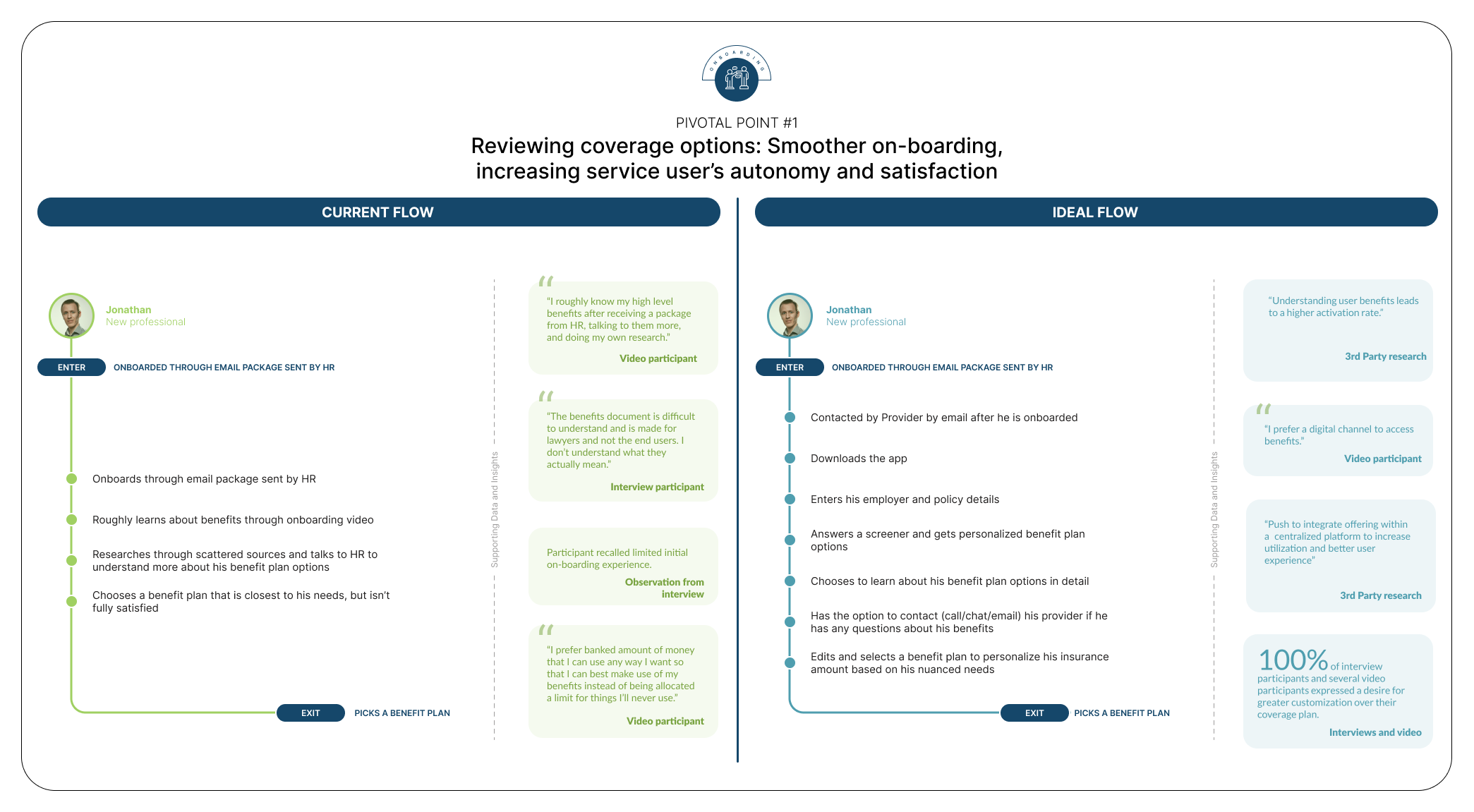
As employees start their new job or students start at a university and receive their orientation package, they feel overwhelmed and confused about the various coverage options available to them. Addressing this confusion early and providing clear information about coverage options,can help them make informed decisions and feel supported in their journey.
Pivotal Point #2

Engaging with the service

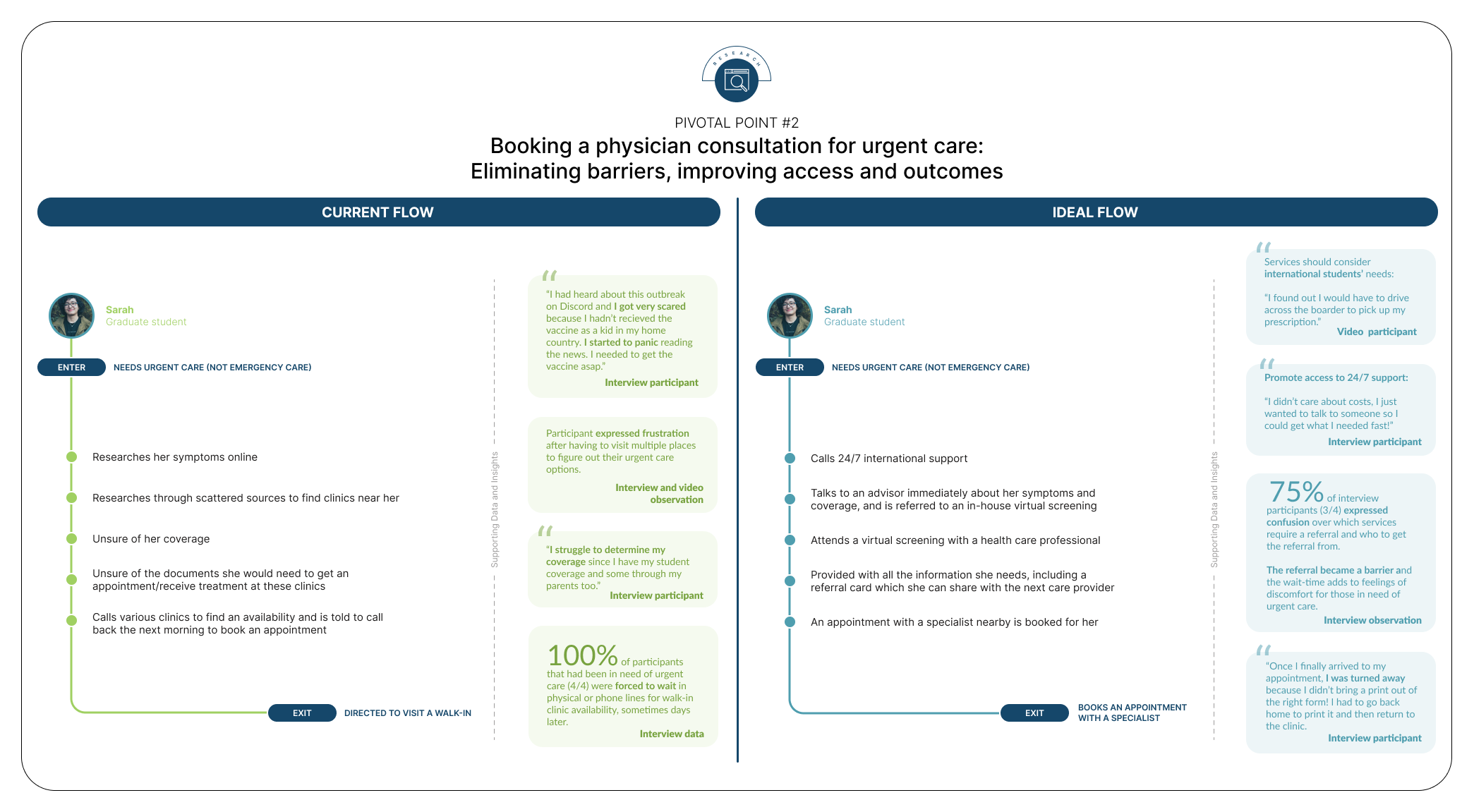
Users face difficulties when seeking referrals and urgent care which often requires them to visit multiple healthcare facilities. They also expressed frustration with appointment wait times and the lack of digital support. The goal is to offer digital solutions that streamline the process and reduce the need for physical visits, thereby increasing convenience for users seeking urgent care and referrals.
CO-DESIGN

Ideating with users

Finding #1
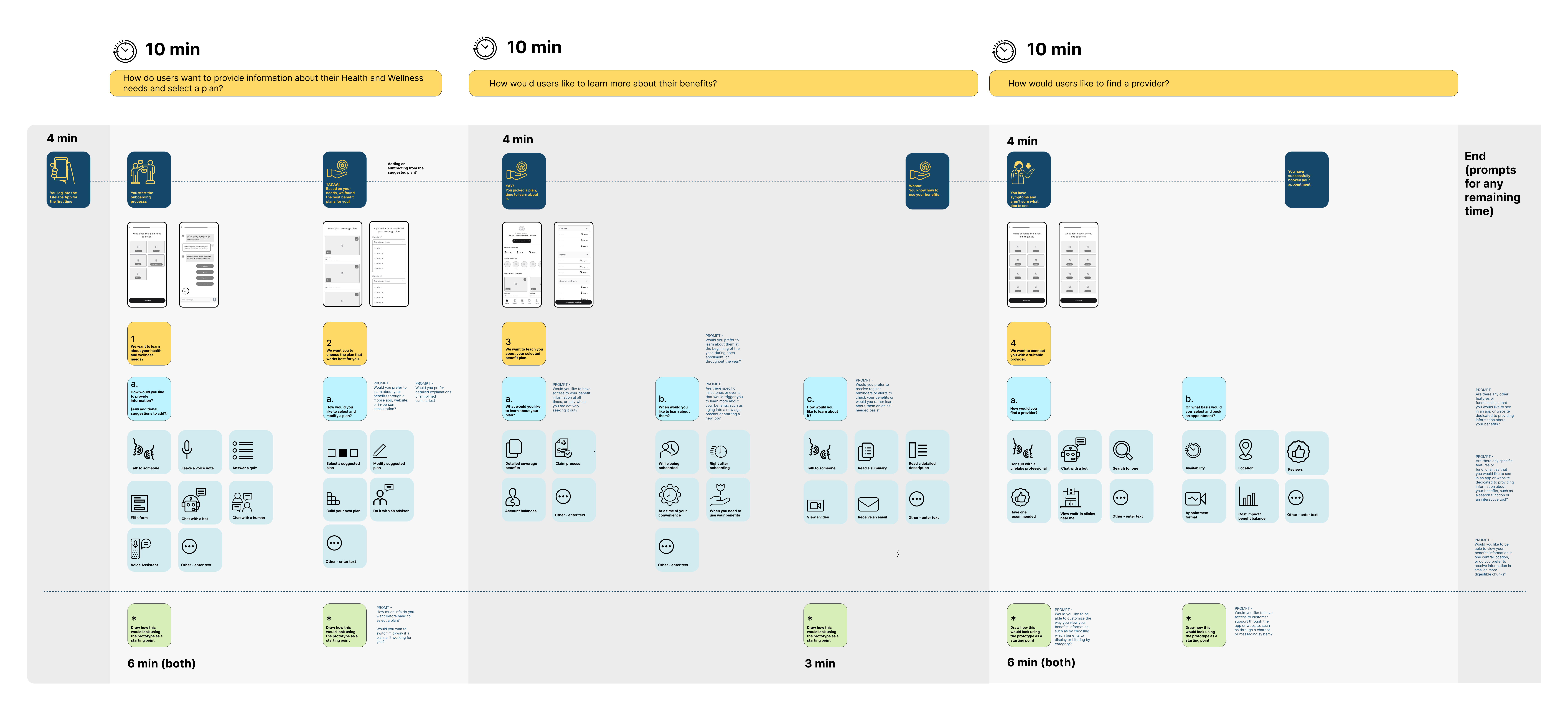
To better understand how users want to select a plan and what about their plan would they want to learn about as well as how, we used lo-fi screens and prompts to facilitate the co-design session. We learnt that users wanted a fast, simple onboarding with a quiz-style questionnaire, more customization, a benefits summary and better findability.

Finding #2
We found that users look for a variety of criteria when choosing a service provider, prefer reduced steps when booking an appointment and favor digital support over in-person assistance wherever possible.
The Solution

By leveraging LifeLab's ecosystem of existing products and features, we are confident that we can increase activation and utilization rates, boost customer satisfaction, and help customers take control of their health and well-being.

recommendations

Simple, yet powerful features

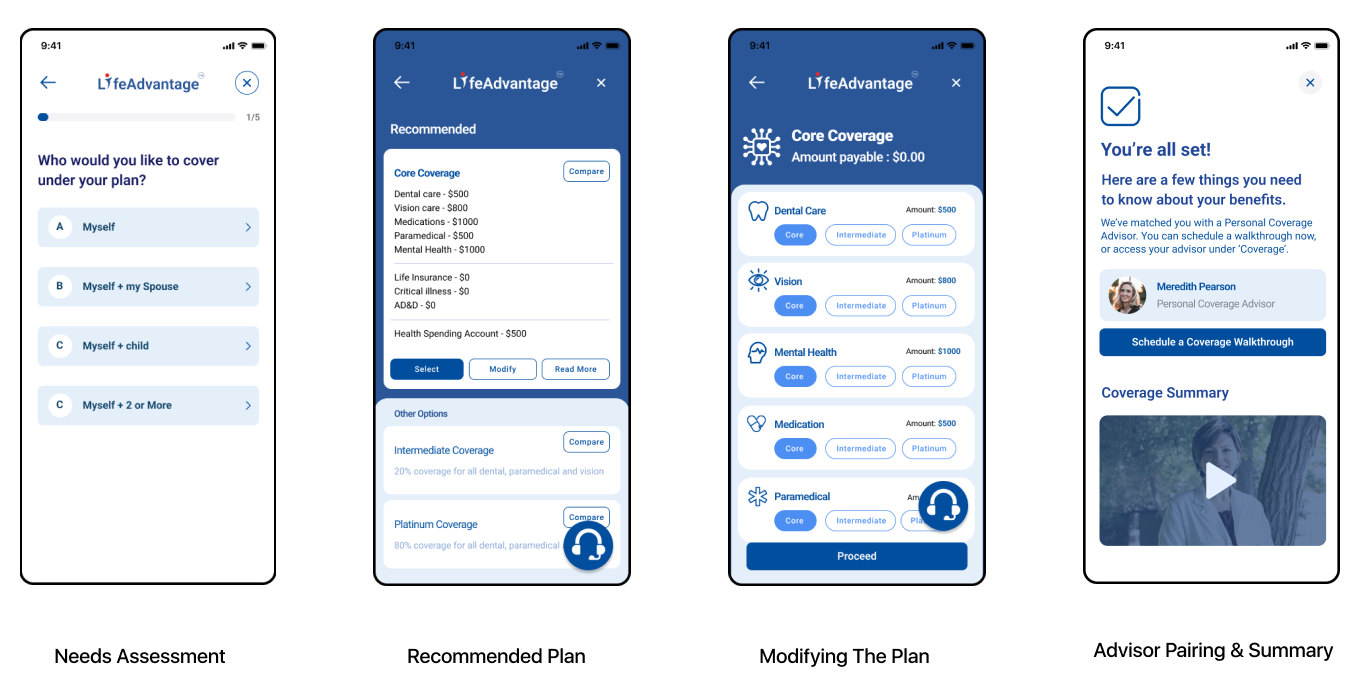
Automated Onboarding & Customization

Service Outcome: User has greater control over their coverage options and feels they are getting better value from their plan

Business Outcome: Automating onboarding to reduce manual and inconsistent processesIncreased enrolment and access to user data
Understanding & Access

Service Outcome: User has a clearer understanding of their insurance coverage and how to use it since they have better access to information - all in one place.

Business Outcome: Increased customer satisfaction and retention

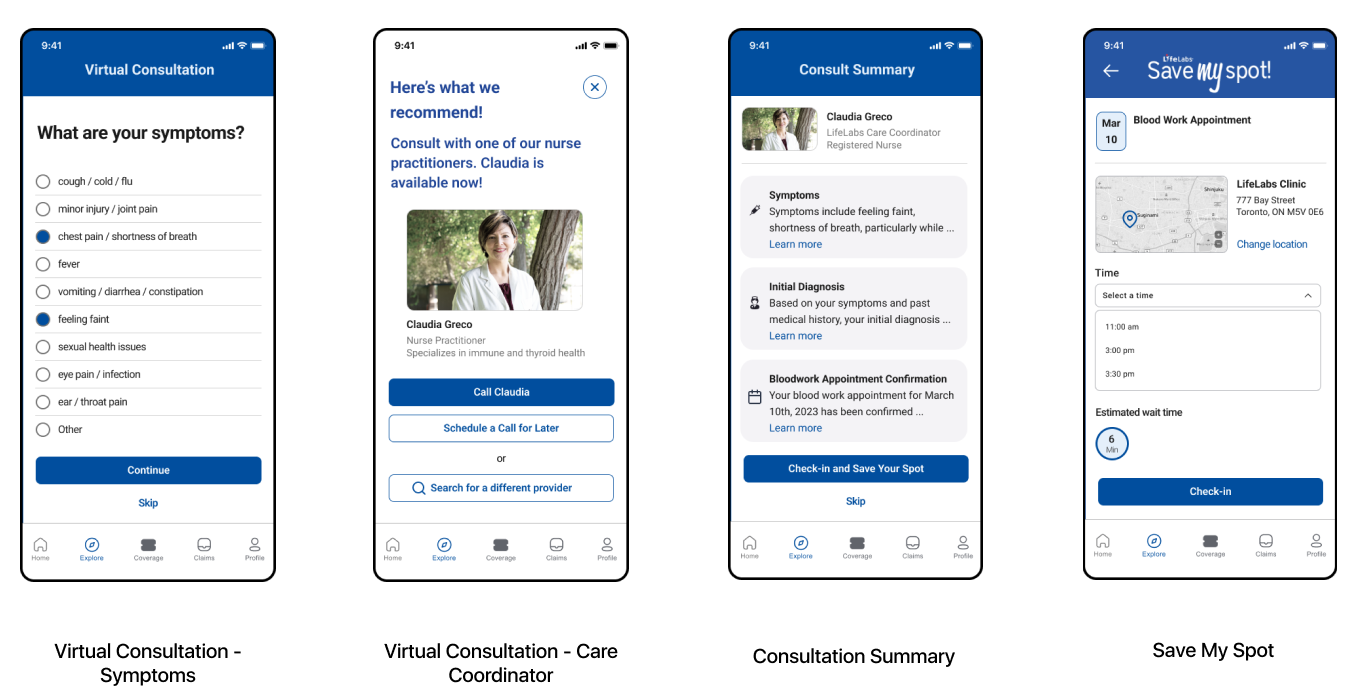
Virtual Consultation

Service Outcome: Users can skip the inconvenience of visiting multiple healthcare facilities to obtain a referral or appointment by taking advantage of virtual consultations. Additionally they can bypass wait times by utilizing the ‘Save my Spot’ feature.

Business Outcome: Leverage existing LifeLab infrastructure to offer convenient health care to customers (Save My Spot and virtual health consultations) helps
increase utilization rate and customer satisfaction + retention.
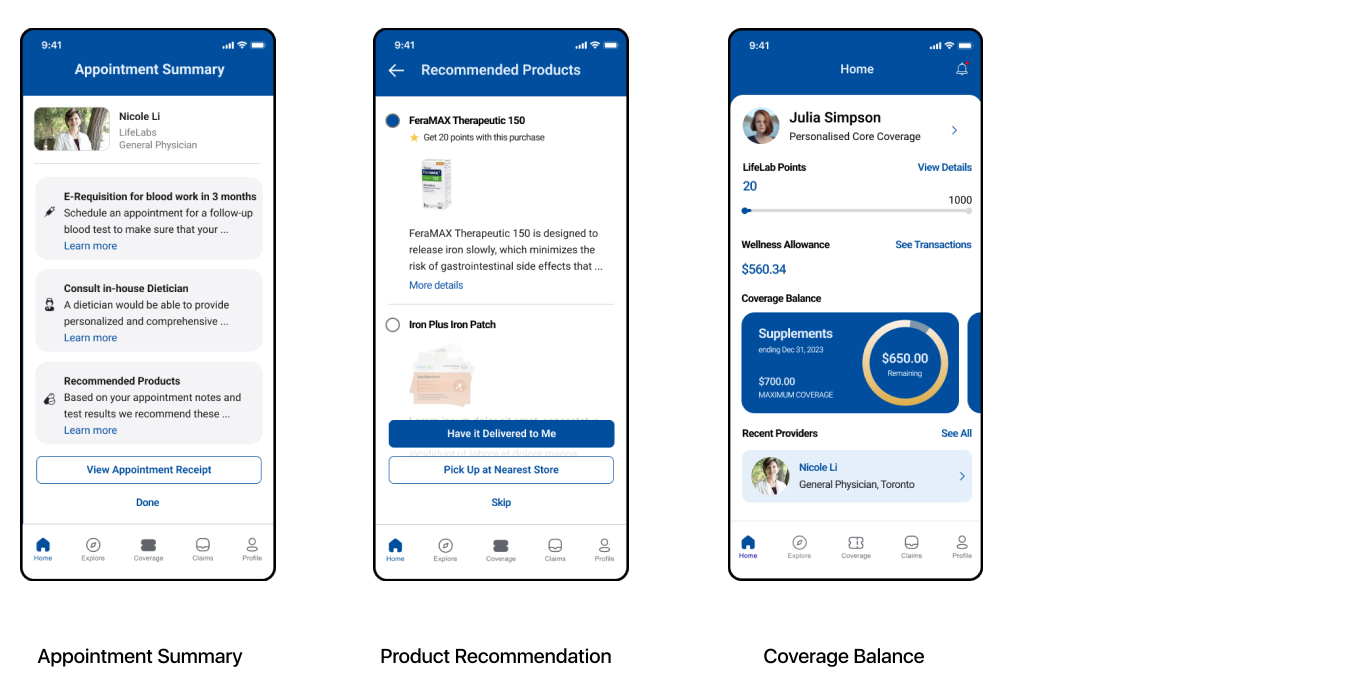
Personalized Recommendation

Service Outcome: Users get personalized recommendations on follow-up appointments and products to purchase based on their appointment results along with access to “one-stop-shop” service.

Business Outcome: Leverage existing LifeLab infrastructure to offer convenient health care to customers (Save My Spot and virtual health consultations) helps
increase utilization rate and customer satisfaction + retention.
SOLUTION

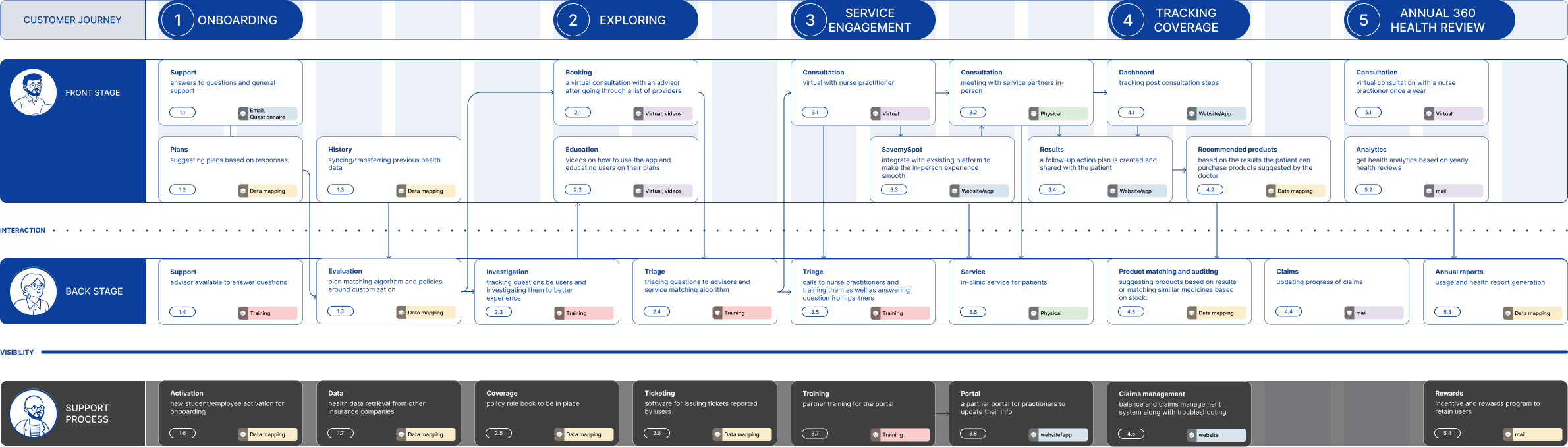
Service Blueprint

By leveraging LifeLab's ecosystem of existing products and features, we are confident that we can increase activation and utilization rates, boost customer satisfaction, and help customers take control of their health and well-being.
Implementation

Prioritization and feature roll-out

Incremental Changes

Provide access to the basics

Provide an app. that outlines existing coverage, remaining balances, claim history, etc.

Quick Wins

Automate the on-boarding process

Create a consistent on-boarding experience. Connect with partners, form activation targets and processes.

Blue Sky

Develop one-stop-shop application

Develop a robust application that integrates services, houses all info, lists partners, provides access to analytics.

Incremental Changes

Connect with partners

Establish a partners portal to make it easy for claims to be sent in by service providers instead of the user.

Quick Wins

Integrate in-house resources

Reach out to partners to increase integration with services (SaveMySpot, tele-health, clinics, market, etc).

Blue Sky

Deploy virtual health model

Expand virtual health model by hiring nurse practitioners for consultation, basic prescriptions, and referrals.

Incremental Changes

Understand different plans

Collect data on existing customer needs and establish different plan ranges. Consult ops/legal on linking health data.

Quick Wins

Enable plan matching

Expand on-boarding to include plan matching based on user responses to questionnaire.

Blue Sky

Enable customization

Expand on-boarding to enable reasonable customization. Enable heal data linking and analytics.